Author: Simon Ellis

  • kinaesthetic heritage

    kinaesthetic heritage

    The history that this space holds
    The lineages of those who have gathered and danced here before
    The lineages of the people I hold in my body
    The languages I hold, I cradle,
    The tongues in my mouth.

    L’histoire ensevelie dans cet espace
    La lignée de celles et ceux qui, autrefois, se rassemblaient ici et qui dansaient
    La  lignée de celles et ceux ensevelis dans mon corps
    Les langues que je tiens, que je berce,
    Les langues dans cette bouche.

    Les saisons qui passent. Le temps qui passe.
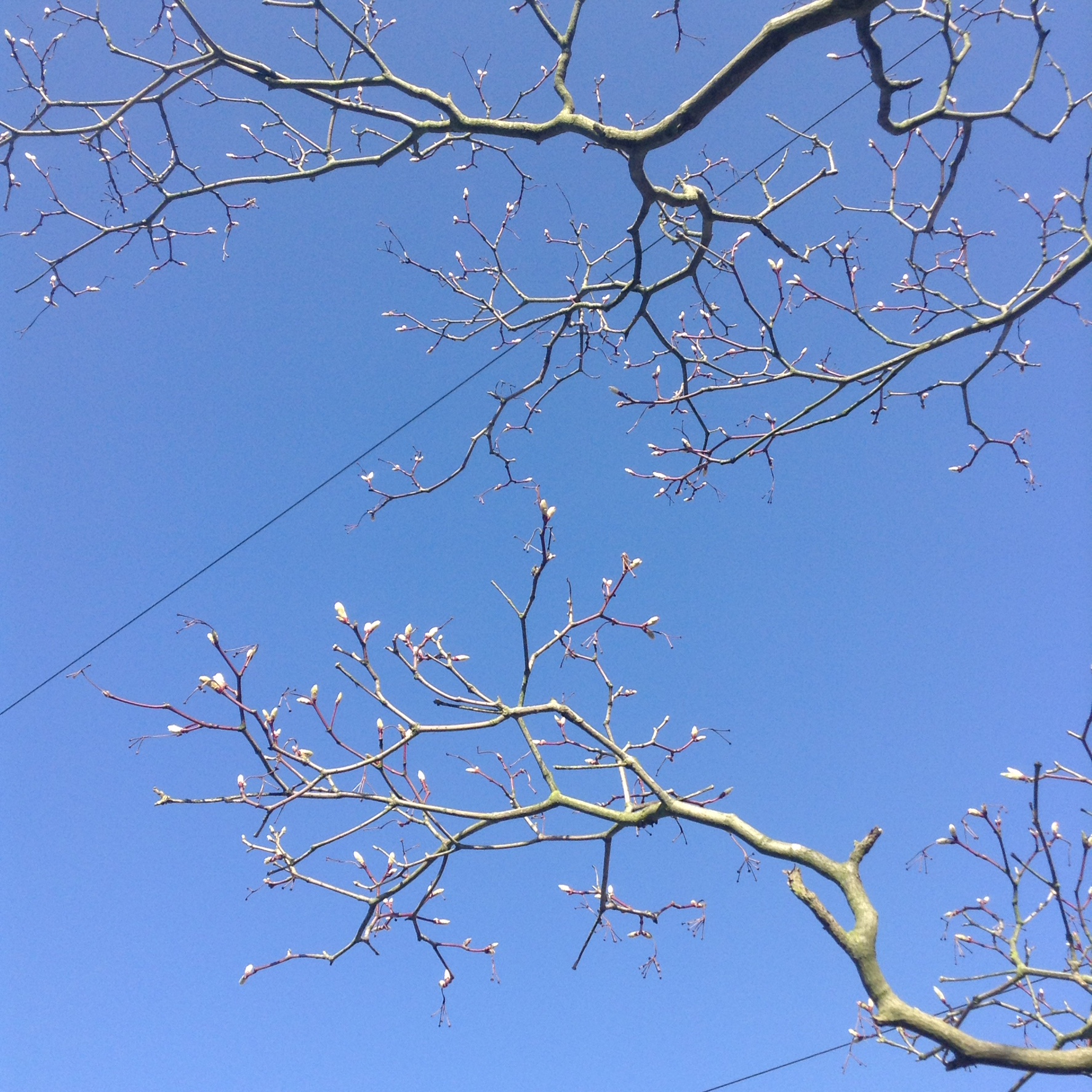
    Le printemps avec ses arbres qui bourgeonnent
    L’été porté par l’automne, et l’automne par l’hiver,
    Puis, de nouveau, le printemps qui fleurit.
    Les saisons que je porte,
    Les saisons portées par cet espace, par ce corps.

    A sense of the seasons passing. And time.
    How Spring is here in the trees bursting into leaf
    How Summer is carried in Autumn
    And Autumn in Winter. And then Spring again.
    The many seasons I have carried
    The many seasons this space, this body, has carried.

    – April 2025, Studio notes MLC

    Kinaesthetic Heritage: bodies, memories, contested heritages, a British Council funded Springboard project is a collaboration between Coventry University (C-DaRE: Marie-Louise Crawley, Heni Hale and Miranda Laurence, and CAMC: Elizabeth Benjamin) and the SFR Création and Performance Lab at the Université Grenoble Alpes (Gretchen Schiller, Lucie Bonnet, Camille Zimmermann). A  bilingual, multidisciplinary team embracing dance practice and scholarship, circus, history, critical heritage studies, memory studies and philosophy, we are investigating through practice the role that movement perception plays in uncovering modes of remembering.

    Our research is grounded in the 4E approach to cognition (embodied, embedded, enactive and extended, Newen, Gallagher and de Bruin 2018) and aims to expand understandings of the kinaesthetic, through a close focus on a core subtheme of bodies and memory. We ask how movement might mobilise memory differently, and how, through a kinaesthetic lens, we might be able to view history/heritage differently, giving visibility to previously marginalised bodies and stories, and offering innovative methodologies for how we might think through difficult or uncomfortable heritage.

    In the current context, these questions are timely and significant: this research approaches a ‘hot topic’ area around moving bodies, memory and contested histories from the perspective of asking how dancers’ expertise of kinaesthetic knowledges might benefit our cultural heritage institutions in (re)reading, (re)viewing and (de)constructing cultural memory through embodied interaction and engagement. Building on recent explorations of ‘ecosystemic’ practice research (Ellis 2023), our thinking is grounded in an investigation of the place of dance practice research within interdisciplinary inquiry and the ramifications of such methodologies for how we might think about memory and history differently.

    Spring saw us spending a first week together in the studio at Coventry sharing practice and beginning to build a bilingual English-French ‘lexicon’ for thinking about memory, history and heritage, from, with and through the body. We are now looking forward to our next meeting together in the summer in Grenoble.

    – Marie-Louise Crawley, C-DaRE

  • This Extraordinary Ordinariness

    A film by Hugo Glendinning, with Siobhan Davies, Rosemary Lee and Jonathan Burrows.

    This film proposes living archive as a document of contemporary dance methodologies and questions at a moment of rapid change and precarity within the field. Choreographers Siobhan Davies, Rosemary Lee and Jonathan Burrows draw upon long embodied histories of practice to reflect upon what may be lost and what might survive, and how to navigate between necessary innovation and vital lineage of ideas, physicalities and philosophies within the form. The film is both a current record and future resource for contemporary dance scholars and practitioners.

    Siobhan Davies has recently created a series of dance works rooted in forms of self-archiving, and in particular Table of Contents (2010) and Transparent (2022). Rosemary Lee is an acknowledged visionary and leader in the field of participatory dance work dealing with landscape and the meeting of body and environment, including Circadian (2019), with 24 dancers of different ages performing the same solo on an empty beach over a 24 hour period. Jonathan Burrows is known for his interdisciplinary work with composer Matteo Fargion, with whom he has recently created the two duets Rewriting (2022) and The Unison Piece (2025). All three artists come from diverse backgrounds and practices, but their conversation reveals the intersections of shared concerns. What does it mean when we talk about the ‘performative’? How does a dance work meet an audience? Modes of attention and the importance of change for how dance connects, communicates and is recognised.

    Siobhan Davies, Rosemary Lee and Jonathan Burrows are Associate Professors at the Centre for Dance Research Coventry University, and the film is supported by C-DaRE with the help of Scott deLahunta.

  • Curatorial Training for Cultural Professionals in Cape Verde

    This professional development programme focused on the critical role of curatorial practices within museums, fostering professional growth and cross-cultural exchange.

    Carolina Rito was guest curator of the curatorial training programme in Cape Verde. Rito organised a week-long programme of workshops, seminars and project development for cultural professionals based in Cape Verde. The focus of the activities centred around the role of curatorial practices in addressing contested memories and histories, and developing critical engagements with various audiences. For a week, the participants had the opportunity to enhance their knowledge about curating, have hands-on experience, and strengthen their professional experience. This programme of activities was organised in collaboration with BLI collective and ZeroPoint Art Gallery. The 12 participants were local practitioners who have prior training or equivalent experience in the cultural field and demonstrate a clear interest in enhancing their curatorial skills.

    Cape Verde National news piece: https://youtu.be/2YJq6__LQFA.

    LinkedIn news story: https://www.linkedin.com/feed/update/urn:li:activity:7310984419585019905

  • a conversation

    14 January 2025

    This was an open session for practice research postgraduate researchers in Creative Cultures. At Coventry University Creative Cultures is made up of four research centres: Centre for Postdigital Cultures (CPC), Centre for Dance Research (C-DaRE), Centre for Creative Economies (CCE) and Centre for Arts, Memory and Communities (CAMC).

    The practice research postgraduates discussed their work and questions with Simon Ellis from C-DaRE. The conversation was broad and intriguing. We talked about: how the postgraduates’ projects had changed in time; the role of supervisors in their research; the nature of the ‘user experience’ when reading and viewing materials in the final submission; research in which the ‘practice’ is the object of the research (like observing the practices of other people); dealing with technical and technological constraints in presenting research and how that coincides with University regulations; and how the ‘contribution to knowledge’ is the only given in considering how the research is presented.